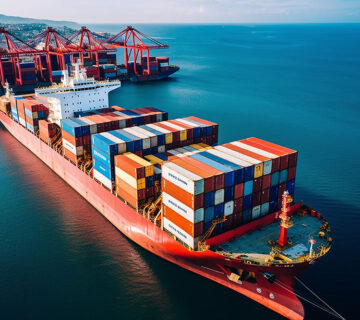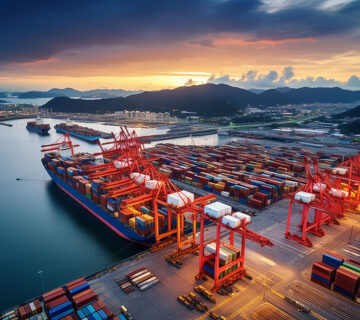

Maritime transport is uniquely suited to handle large-scale movements of goods and resources, making it an essential component of global logistics. From bulk commodities to massive infrastructure projects, the ability of maritime transport to move vast quantities of materials efficiently and cost-effectively underpins major economic activities worldwide.
Bulk Commodity Transport One of the primary uses of maritime transport is the movement of bulk commodities such as oil, coal, grain, and iron ore. These raw materials are often transported in vast quantities from producing regions to industrial centers where they are processed and used in manufacturing. The sheer scale of these operations is possible only through maritime transport, which can move millions of tons of material in a single voyage, providing the raw inputs needed for industries across the globe.
Infrastructure and Mega-Projects Maritime transport also plays a crucial role in supporting large infrastructure and construction projects. Whether it’s the delivery of construction materials for a new port, wind turbines for an offshore wind farm, or components for a major bridge, maritime transport provides the heavy lifting needed to make these projects feasible. The flexibility and capacity of ships allow them to carry oversized and heavy cargoes that would be impossible to move by road or rail.
Humanitarian Aid and Disaster Relief In times of crisis, maritime transport becomes a lifeline for delivering humanitarian aid and disaster relief. Ships can carry large volumes of food, medicine, and supplies to affected areas, especially in regions that are difficult to reach by other means. The ability to transport vast amounts of goods quickly and efficiently makes maritime transport an essential part of international relief efforts.
Conclusion Maritime transport is indispensable for large-scale movements of goods and resources. Its ability to handle bulk commodities, support massive infrastructure projects, and deliver humanitarian aid underscores its critical role in global logistics. As economies continue to grow and develop, the importance of maritime transport in facilitating large-scale movements will only increase.